
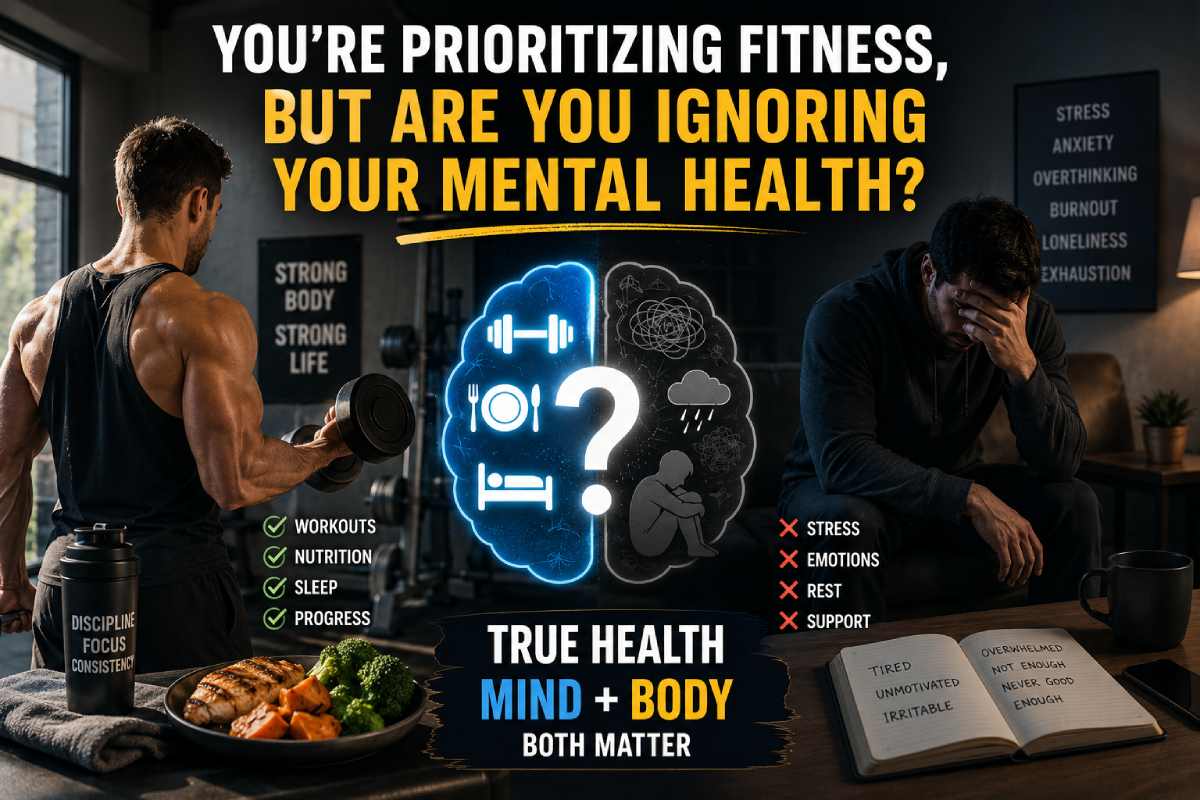
Prioritizing Fitness – A fitness routine can look great on paper. Your workouts are planned, your meals are cleaner, your step count is up, and your body feels stronger than it did a few months ago. From the outside, that can look like full wellness.
Table of Contents
Yet fitness is only one part of health.
Mental health affects how you sleep, work, connect, recover, and make choices. It shapes motivation, patience, focus, and energy. A person can be active, disciplined, and physically strong while still feeling anxious, drained, lonely, or stuck.
Taking care of your body matters. Taking care of your mind matters just as much.
Fitness Can Support Mental Health, But It Is Not a Full Plan
Exercise is one of the most useful tools for overall well-being. Movement can help reduce short-term anxiety, support better sleep, improve thinking skills, and lower the risk of depression over time. It can also bring structure to your day, which is helpful when life feels messy.
That is why walking, lifting, cycling, yoga, swimming, and sports can feel so good. They give your mind a break from screens, deadlines, and daily pressure. They also create a sense of progress, which can build confidence.
Still, workouts cannot solve everything.
A hard training session might calm your stress for an hour, but the same worry may return later. A long run may clear your head, but it may not fix burnout at work. A healthy meal may support your mood, but it will not always quiet racing thoughts.
That is where more direct support can help. For people balancing jobs, family, fitness goals, and full schedules, online therapy can make mental health care easier to fit into real life. It gives you space to talk through stress, habits, relationships, and emotions instead of trying to manage everything through exercise alone.
Mental health care does not mean your fitness plan failed. It means your wellness plan is becoming more complete.
The Quiet Signs Your Mind Needs More Attention
Mental strain does not always show up as a crisis. Often, it starts with small changes you can easily explain away.
You may feel tired after a full night of sleep. You may get irritated over small things. And You may dread work, cancel plans, or feel like you are always behind. You may train harder, hoping the pressure will disappear, only to feel the same once the workout ends.
These signs are worth noticing:
- Rest days make you feel guilty
- Workouts feel like punishment, not care
- You feel tense most of the day
- Sleep is light, broken, or too short
- You avoid people who care about you
- Food choices cause stress or shame
- You feel numb, flat, or unmotivated
- You keep pushing through pain or exhaustion
None of these signs makes you weak. They are signals. Your body gives signals when something needs care, and your mind does too.
Many adults deal with mental health challenges while still showing up for work, parenting, exercising, and meeting responsibilities. The National Institute of Mental Health reports that more than one in five U.S. adults lives with a mental illness. That means many people who seem “fine” may be carrying more than others can see.
Fitness culture can make this harder. Many popular messages praise discipline, grind, and “no excuses” thinking. Those ideas can be useful in small doses, but they can also push people to ignore warning signs.
Real wellness is not about forcing yourself to perform every day. It is about knowing when to move, when to rest, when to talk, and when to ask for help.
Build a Routine That Trains the Body and Supports the Mind
A better wellness routine does not need to be complicated. Start by making mental health a normal part of your week, just like workouts, meals, and sleep.
The CDC recommends that adults get at least 150 minutes of moderate-intensity physical activity each week, plus two days of muscle-strengthening activity. That can include brisk walking, cycling, dancing, gym workouts, fitness classes, or bodyweight exercises.
Use those guidelines as a base, not a rulebook that creates guilt. Your routine should support your life, not take it over.
Try adding a short mental check-in before each workout. Ask yourself:
- Am I training to feel better, or to punish myself?
- Would my body benefit more from rest?
- What emotion am I bringing into this workout?
Then check in after. Did the workout help? Did it distract you for a while? And Did it leave you more tense? These answers can reveal patterns.
Mental health habits can also be simple. You can take a walk without headphones. You can write down the thought that keeps repeating. And You can set a bedtime alarm. You can talk to a trusted friend before stress piles up. You can spend a few minutes outside between work tasks.
Small choices count when they are repeated.
A balanced routine might look like three strength sessions, two walks, one therapy session, a regular bedtime, and one screen-free hour before bed. For someone else, it might look like yoga, journaling, weekend hikes, and monthly mental health check-ins.
There is no single perfect plan. The best plan is one you can keep doing without losing yourself in it.
Strong Health Includes the Part No One Can See
Your body may show progress first, but your mind shapes how that progress feels. A stronger body can help you move through life with more energy. A supported mind helps you enjoy that life with more calm, clarity, and confidence.
Fitness is a powerful habit. It can lift your mood, improve your sleep, and give your day structure. Yet mental health deserves its own care too. Stress, anxiety, burnout, and low mood are not problems you need to outrun or out-lift.
A complete wellness routine gives space to both effort and recovery. It includes movement, rest, connection, and honest support. When your mind is cared for, your fitness goals become healthier, more flexible, and more sustainable.