
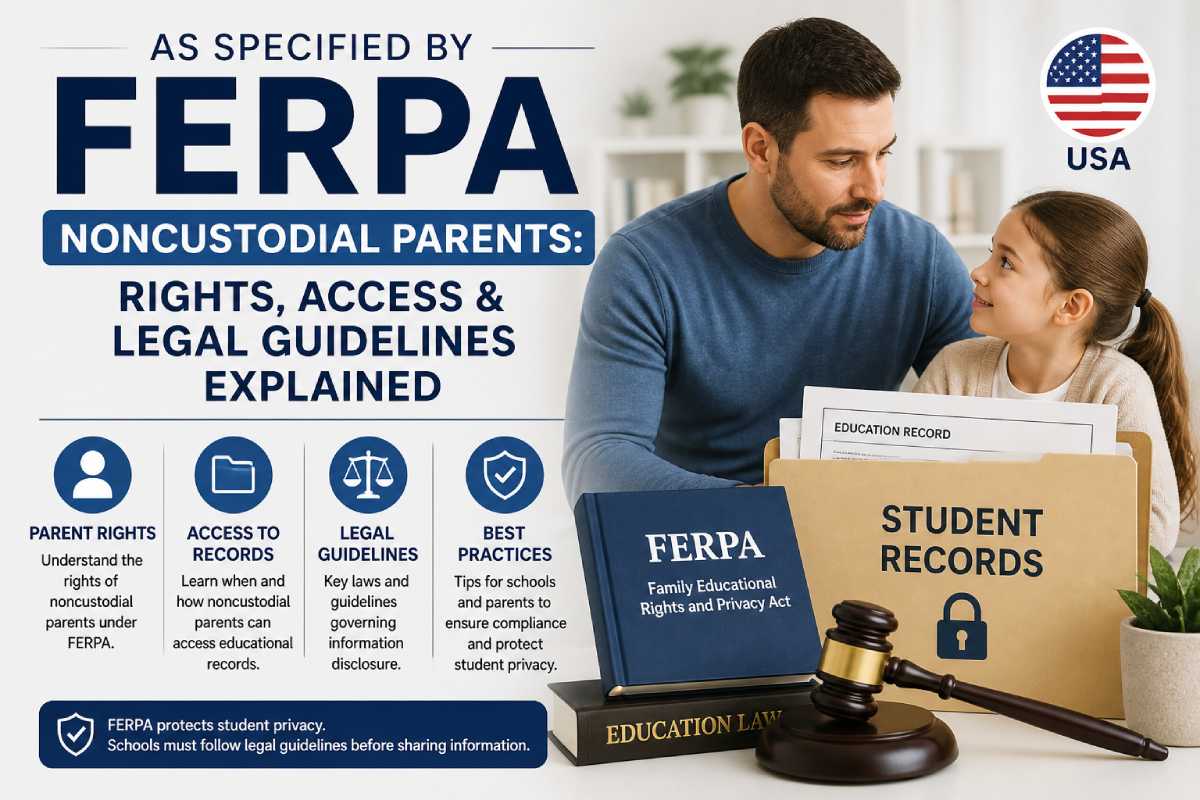
Hearing about what FERPA says regarding noncustodial parents? You are not the only one.
And this is one of the most misunderstood areas of education law. Few people realize that if a parent does not have custody, they are not necessarily denied access to school records. In fact, the law is quite contrary.
The laws give the rules and rules well. Even most of the time, noncustodial parent still has equal rights.
Table of Contents
What Is FERPA?
The Family Educational Rights and Privacy Act is a U.S. federal law that protects the privacy of student education records.
It applies to:
- public schools
- private schools receiving federal funding
- colleges and universities
FERPA governs:
- who can access student records
- how schools handle sensitive information
- when records can be shared
Who Is Considered a Noncustodial Parent?
A noncustodial parent is a parent who:
- does not have primary physical custody
- may not live with the child
- still retains legal parental rights in many cases
Custody status and legal rights are not the same. A parent may lack custody but still have legal authority related to their child.
As Specified by FERPA, Noncustodial Parents: What Rights Do They Have?
Under FERPA, noncustodial parents generally retain access to their child’s education records.
This includes:
- report cards
- transcripts
- attendance records
- disciplinary records
- academic progress
Schools are not required to obtain permission from the custodial parent before granting this access.
When Can Schools Deny Access to Noncustodial Parents?
Schools can deny access only under specific legal conditions.
These include:
- a court order that revokes parental rights
- a legally binding custody agreement that restricts access
- applicable state laws limiting disclosure
Without valid documentation, schools must provide access.
What Documents Can Override FERPA Rights?
Certain legal documents can override FERPA rights:
- court orders
- divorce decrees
- restraining orders
- guardianship rulings
The restriction must be clearly stated. If it is not explicitly mentioned, access rights remain.
FERPA vs Custody Agreements: Key Differences
| Aspect | FERPA | Custody Agreement |
| Purpose | Privacy law | Family law |
| Default access | Allowed | May restrict |
| Authority | Federal | Court-based |
| Override | Legal documentation required | Can override access |
Rights of Students vs Parents Under FERPA
FERPA rights transfer when:
- the student turns 18
- or enrolls in a postsecondary institution
After that, the student controls access to their records.
Can Noncustodial Parents Access Records Without Permission?
Yes. This can also be done without the consent of the custodial parent.
Allow noncustodial parents to request access in writing directly to the school unless prohibited by law.
How Schools Verify Access Requests
Schools typically:
- verify identity
- confirm parental relationship
- review legal restrictions
- check official documentation
Only then do they approve or deny access.
Common Misconceptions About FERPA and Noncustodial Parents
- Custodial parents cannot automatically block access
- Schools cannot deny access without legal proof
- Noncustodial parents often still retain rights
What can Non-custodial Parents Do if Access is Denied?
Steps to take:
- request a written explanation
- provide legal documentation
- contact school administration
- escalate to district authorities
- file a complaint with the U.S. Department of Education
How Schools Must Comply With FERPA
Schools are required to:
- provide access within a reasonable timeframe
- maintain confidentiality
- verify legal restrictions before denial
- handle records responsibly
FERPA Exceptions That Affect Access
Exceptions include:
- health and safety emergencies
- law enforcement requests
- student transfers
These are limited and regulated.
How FERPA Protects Student Privacy
FERPA ensures:
- controlled access to records
- protection against unauthorized disclosure
- transparency in record handling
It balances parental rights with student privacy.
FERPA Compliance Checklist for Schools
Schools should:
- verify identity properly
- review legal documents carefully
- avoid assumptions based on custody
- follow federal guidelines
How to Request Student Records Legally
Noncustodial parents should:
- contact the school
- submit a formal request
- provide identification
- confirm parental relationship
- follow school procedures
What Happens If Schools Violate FERPA?
Possible outcomes include:
- formal complaints
- federal investigation
- compliance action
Examples of Court Orders That Restrict Access
Examples include:
- termination of parental rights
- restraining orders
- custody rulings with explicit restrictions
FAQ
FERPA rights for noncustodial parent?
Yes, unless those rights are taken away by a court order or law.
When does FERPA rights transfer to student?
When the individual has reached 18 years old. Or when the individual attends college.
Do noncustodial parents have rights under FERPA?
Yes, unless a court order or law removes those rights.
Can a school refuse access without proof?
No, legal documentation is required.
Does custody automatically affect FERPA rights?
No, custody status alone does not remove access.
Final Thoughts
According to FERPA, children’s non-custodial parents will usually have access to the child’s educational records, unless a legal document states otherwise.
Knowing this information can help parents, schools, and students to access it and keep it private more effectively and stay compliant with federal law.